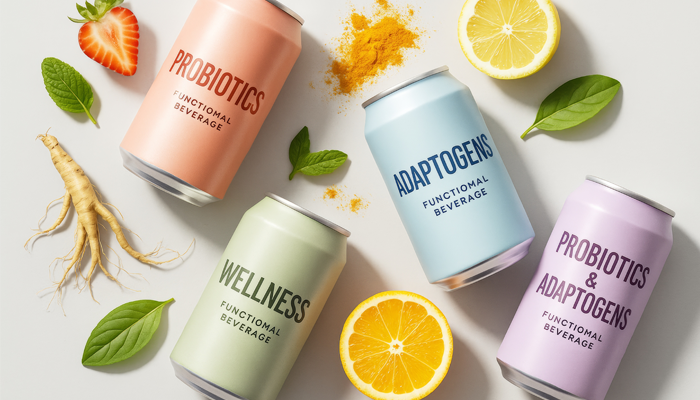
The ready‑to‑drink (RTD) beverage market is undergoing another evolution, this time driven by nootropics and functional formulations designed to support focus, mood, energy, and overall wellness. Once limited to powders and supplements, ingredients like caffeine‑L‑theanine blends, adaptogens, amino acids, and functional botanicals are now finding mainstream success in canned drinks, aseptic cartons, and bottled beverages. As the category expands, it is placing new demands on beverage processing and packaging systems.
A Fast‑Growing Functional Segment
Functional beverages are projected to grow at a high single‑digit CAGR globally through the end of the decade, with energy, mental focus, and wellness‑positioned RTDs among the strongest growth segments. Within that universe, nootropic beverages, drinks formulated for cognitive support, are gaining traction with Gen Z and millennial consumers seeking alternatives to traditional energy drinks (Source).
Popular examples include sparkling focus waters with caffeine and L‑theanine, adaptogenic teas featuring ingredients such as ashwagandha or lion’s mane, protein‑fortified coffees, and wellness shots designed for productivity or stress reduction. These formulations are often clean‑label and preservative‑free, making packaging and processing choices especially critical.
Processing Decisions Start with pH
From a manufacturing standpoint, the most important variable is pH. High‑acid beverages (pH ≤4.6), such as tea‑based focus drinks, citrus‑forward energy waters, and many functional juices, may be suitable for hot‑filling or tunnel‑pasteurization and distributed at ambient temperatures when the formulation, container type, and target shelf life support it.
Low‑acid beverages (pH >4.6), including protein RTD coffees, dairy‑based or plant‑based functional drinks, and some nutraceutical formulations, require more intensive processing. These products must be either aseptically processed or fully retorted to achieve commercial sterility and comply with FDA low‑acid canned food regulations. [ecfr.gov], [fda.gov]
As a result, packaging format and processing method are inseparable decisions for brands entering the nootropic and functional RTD space.
Common Processing Pathways
Several processing technologies dominate this category:
- Hot‑fill/hold is widely used for high‑acid functional teas, juices, and sports drinks. Liquids are filled at elevated temperatures (typically 185–205°F), sealed, and cooled, sterilizing both product and container.
- Aseptic processing and packaging enable shelf‑stable distribution for low‑acid functional beverages without the flavor damage associated with full retort. This approach is common for RTD coffees, dairy alternatives, and fortified nutrition drinks.
- Retort processing is used for shelf‑stable, low‑acid beverages packaged in cans, glass bottles, or retortable pouches. Rotary or agitating retorts are often required for beverages to improve heat transfer and minimize quality degradation. [stockamerica.com]
- High‑pressure processing (HPP) has become popular for refrigerated functional juices and wellness shots. HPP inactivates pathogens without heat, preserving fresh flavors and sensitive bioactives, but requires pressure-tolerant packaging and cold‑chain distribution.
Packaging Formats That Dominate Functional RTDs
Packaging choices reflect both processing requirements and branding strategy:
- Aluminum cans are the leading format for energy and focus beverages due to excellent oxygen and light barriers, high recyclability, and compatibility with nitrogen dosing to pressurize still formulations, providing structural integrity and protecting against oxidation.
- Hot‑fill PET bottles are common for teas and functional juices, featuring vacuum panels designed to withstand temperature changes during cooling.
- Glass bottles remain popular for premium functional tonics and teas but add weight and breakage risk in distribution.
- Aseptic cartons are increasingly used for RTD coffees, plant‑based functional drinks, and adaptogenic beverages, offering ambient shelf life and strong sustainability credentials.
- Small PET bottles are standard for HPP‑treated wellness shots, requiring pressure‑tolerant closures and minimal headspace.
Packaging as a Competitive Advantage
As nootropic and functional beverages continue to gain mainstream traction in RTD, packaging is becoming a differentiator, not just a container. Oxygen management, shelf‑life stability, regulatory compliance, and sustainability expectations all influence package selection. Brands that align formulation, processing, and packaging early are better positioned to scale efficiently while protecting flavor, function, and consumer trust.
In the functional RTD market, packaging is integral to product performance and standing out on the shelf against competitors.
Supporting Functional RTD Growth with Integrated Packaging Solutions
As nootropic and functional RTD beverages continue to scale, many producers are turning to integrated partners that can support both processing and packaging complexity. ProMach’s portfolio of product brands offers end‑to‑end solutions tailored to the ready‑to‑drink market, spanning beverage processing, filling, seaming, labeling, cartoning, and palletizing. With capabilities that support hot‑fill, cold‑fill, aseptic, retort, and refrigerated beverage applications across cans, bottles, and cartons, ProMach helps manufacturers navigate evolving formulation requirements while maintaining line flexibility, efficiency, and compliance.
Click here for more information on ProMach’s ready‑to‑drink packaging and processing solutions.
And for more information on ProMach’s Ready-to-Drink Market Solutions capabilities, watch the spotlight video below.