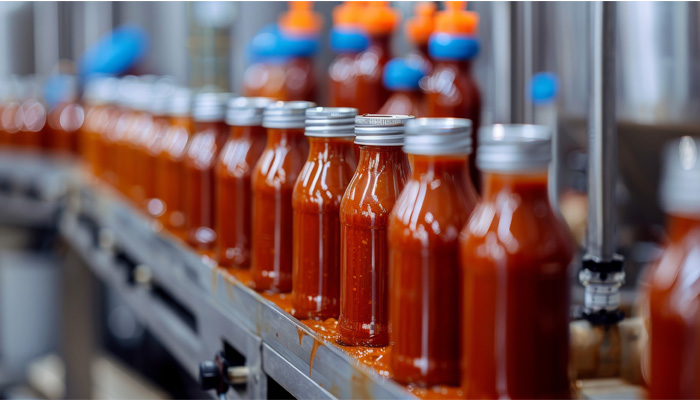
Shelf life and product integrity are no longer driven by packaging material alone. Today, they are the result of a tightly connected system—where packaging format, barrier performance, and processing method must work together to protect product quality from the first fill through distribution and storage.
As consumer expectations for freshness, clean labels, and sustainability rise, manufacturers are under increasing pressure to optimize packaging without over‑engineering it. According to PMMI, packaging decisions are increasingly shaped by trade‑offs between material performance, equipment compatibility, and the need to preserve product quality while meeting sustainability goals. [pmmi.org]
Start with Product Sensitivity
The foundation of effective shelf‑life packaging is understanding how a product reacts to its environment. Exposure to oxygen, moisture, light, and temperature all contribute to degradation, but the degree of sensitivity varies widely by product type.
Barrier packaging materials play a critical role in limiting that exposure. Oxygen and moisture barriers, in particular, are essential for maintaining freshness, preventing oxidation, and reducing microbial growth in food and beverage products. Selecting the appropriate barrier properties begins with defining what the product needs protection from—not what packaging format is currently in use. [uspackagin…apping.com]
Matching Packaging Format to Distribution Needs
Packaging format directly influences shelf life and integrity, especially as distribution channels expand. Flexible pouches, rigid containers, cartons, and cans each offer different protective characteristics and processing requirements.
Rigid formats such as glass and metal provide strong barriers against gases and moisture and are well‑suited for thermally processed products that require extended shelf life. Flexible packaging, meanwhile, offers lightweight efficiency and material reduction, but often relies on advanced multi‑layer or coated structures to achieve comparable barrier performance. [foodsafety.institute]
The key is aligning the format with how the product will be processed, stored, and transported—whether that means ambient storage, refrigeration, or long‑distance distribution.
Barrier Performance Is Only as Good as the Seal
Barrier materials alone do not guarantee shelf life. Seal integrity is just as critical. Even high‑performance films can fail if sealing conditions are inconsistent or poorly matched to the material structure.
Industry research highlights the risk of both under‑packaging and over‑packaging. Insufficient barrier or weak seals can lead to premature spoilage, while over‑engineered materials increase cost and environmental impact without improving performance. Finding the balance requires validating barrier performance under real‑world conditions, including temperature and humidity variations across the supply chain. [packagingt…htoday.com]
Processing Method Shapes Packaging Requirements
Processing plays a defining role in determining which packaging solutions will deliver the desired shelf life. Aseptic processing, for example, enables extended ambient shelf life by sterilizing both the product and the package separately before filling in a sterile environment. [packaging-…ateway.com]
Aseptic packaging systems rely on multi‑layer structures that protect against oxygen, light, and moisture, allowing products to remain shelf‑stable for months without refrigeration or preservatives. By contrast, hot‑fill, retort, or pasteurization processes place different thermal and mechanical demands on packaging materials and seals.
Packaging decisions must account for how processing conditions affect material performance, seal strength, and long‑term integrity.
Designing for the System, Not the Component
The most successful shelf‑life strategies take a system‑level view. Packaging format, barrier properties, sealing technology, and processing method must be evaluated together, not in isolation.
PMMI emphasizes that collaboration between CPGs, material suppliers, and equipment manufacturers is becoming increasingly important as packaging materials evolve and compatibility challenges grow. When these elements are aligned early in the design process, manufacturers are better positioned to protect product integrity while avoiding unnecessary complexity or cost. [pmmi.org]
In an environment where shelf life expectations continue to rise, packaging that is thoughtfully matched to the product and the process behind it remains one of the most powerful tools manufacturers have to deliver quality, consistency, and confidence to the market.