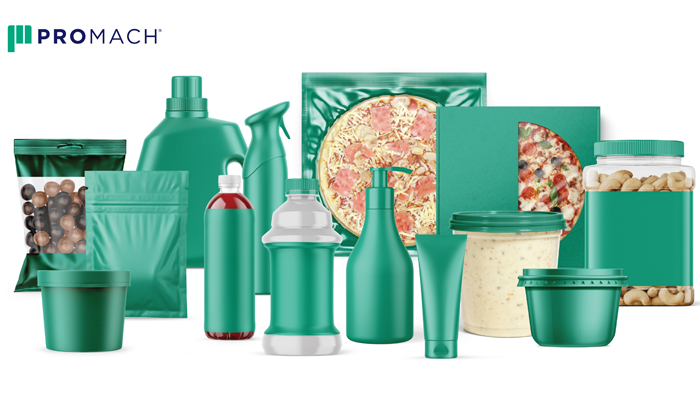
Product variety has become a defining feature of today’s food and beverage landscape. Across liquid foods, ready‑to‑drink (RTD) beverages, pet food, and spirits, manufacturers are managing more SKUs, shorter production runs, and faster changeovers than ever before. What was once an occasional operational challenge is now a daily reality, forcing packaging and processing lines to evolve.
According to PMMI, manufacturers are prioritizing productivity and flexibility as SKU counts rise and labor constraints persist, accelerating the adoption of automation, modular equipment, and smarter line design. The goal is no longer just speed, but adaptability, maintaining throughput while accommodating frequent product and package changes.
SKU Proliferation Is Reshaping Line Strategy
SKU proliferation has been driven by consumer demand for variety, premiumization, sustainability claims, and channel‑specific formats. While some brand owners have attempted to rationalize SKUs, many continue to introduce new products and packaging variations to stay competitive.
On the plant floor, this translates into more changeovers, smaller batch sizes, and increased complexity across primary, secondary, and end‑of‑line packaging. Packaging lines designed for long, uninterrupted runs must now pivot quickly between formats without excessive downtime.
Faster Changeovers Become a Competitive Advantage
Changeover efficiency is one of the most critical performance metrics in high‑SKU environments. Modern packaging systems increasingly rely on recipe‑driven controls, tool‑less adjustments, and automated settings recall to reduce manual intervention and variability.
Industry experts note that quick, repeatable changeovers are essential to keeping multi‑SKU operations profitable, particularly in pet food and RTD production, where package sizes, materials, and formats vary frequently. When changeovers shift from hours to minutes, manufacturers gain the flexibility to run shorter campaigns without sacrificing overall equipment effectiveness (OEE).
Modular Line Design Supports Flexibility
To support product variety, many manufacturers are moving away from rigid, linear layouts toward modular line design. Modular conveyors, reconfigurable stations, and standardized interfaces allow packaging lines to be adjusted as product mixes change.
PMMI highlights modular conveying and standardized equipment integration as key enablers of flexible line design, helping manufacturers adapt to new formats while minimizing disruption. This approach is particularly valuable in facilities that serve multiple brands or product categories under one roof.
Automation and Robotics Address Complexity and Labor Constraints
Automation continues to play a central role in managing SKU proliferation. Robotics, in particular, are increasingly deployed in applications such as case packing and palletizing, where frequent pattern changes and format variation would otherwise slow operations.
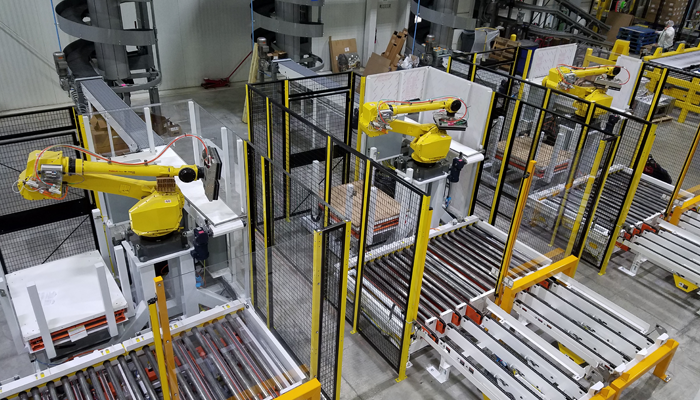
In high‑mix environments, robotic systems can store and recall multiple patterns and configurations, allowing manufacturers to switch between SKUs with minimal downtime while maintaining consistency and accuracy. This capability is especially relevant for spirits and RTD producers managing a growing mix of multipacks, limited releases, and seasonal offerings.
Processing and Packaging Must Evolve Together
Product variety affects more than packaging alone. Changes in formulation, viscosity, particulate content, or sanitation requirements often accompany new SKUs, placing additional demands on upstream processing equipment.
PMMI research emphasizes that processing and packaging decisions must be evaluated together to ensure compatibility, especially as automation and digital controls become more tightly integrated across the line. When processing and packaging systems are aligned, manufacturers can respond more effectively to market changes without introducing bottlenecks.
Designing for What Comes Next
As SKU proliferation shows no sign of slowing, manufacturers are increasingly designing lines with future flexibility in mind. Rather than optimizing for a single product, they are investing in systems that can scale, adapt, and evolve alongside their portfolios.
Across liquid foods, RTD beverages, pet food, and spirits, the common thread is clear: processing and packaging lines are no longer static assets. They are dynamic systems built to absorb change, support innovation, and keep pace with an increasingly diverse marketplace.
Questions on your line design? Reach out to our experts to get answers: Contact Us