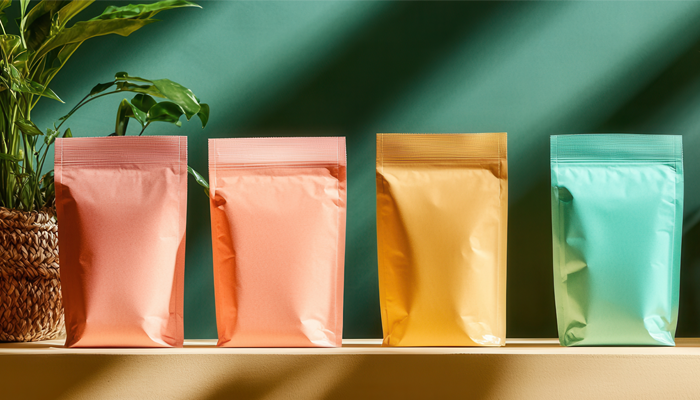
Private label has outgrown its budget‑tier reputation. As more consumers choose store brands for value and quality, retailers are prioritizing private label as a strategic growth driver. That shift brings new packaging expectations: faster design refreshes, shorter lead times, and tighter coordination across materials, artwork, and line changeovers. For manufacturers, the practical challenge is building operations that can flex quickly without eroding efficiency or quality.
A Market Shift Driven by Consumer Demand
Recent market data shows just how quickly private label is accelerating. NielsenIQ reports that 53% of global consumers are purchasing more private label products, with 68% viewing them as good alternatives to name brands and 69% seeing them as offering strong value. Retailer investment is keeping pace: store brands in 2025 outpaced national brands in both unit and dollar sales, pushing private label to 23.1% of unit sales and 21% of dollar sales, according to data shared at the PLMA trade show (FoodDive).
Meanwhile, broad shopping trends continue to favor store brands as well. One recent analysis found that store brands grew 3.7% while national brands increased only 1.1%, widening the value gap for inflation‑sensitive consumers. This shift puts retailers in a powerful position and they are leveraging that position to demand more agility from their packaging and manufacturing partners. (Emarketer)
Why Faster Packaging Cycles Matter
As private label becomes a larger share of assortment strategy, there is a good chance that retailers continue to accelerate design and iteration. Product lines that once took months to refresh now move on timelines counted in much shorter timelines. The implications are:
- Changes in packaging formats and additional SKUs
- Greater emphasis on packaging as a point of brand differentiation
- Faster updates to maintain relevance with trend‑sensitive consumers
Packaging has become a strategic differentiator. At the 2025 Private Label Manufacturers Association show, retailers emphasized how packaging directly influences shelf appeal and operational efficiency. Lidl US highlighted the critical role of shelf‑ready packaging, emphasizing that strong on‑shelf presentation drives sell‑through and reduces labor needs.
Shelf-ready packaging isn’t just about aesthetics, it’s also tied to productivity. Faster stocking, fewer touchpoints, and more consistent merchandising are baseline expectations. Manufacturers supplying private label products must understand these requirements early and incorporate them into design and production planning.
Operational Implications
Growing private label packaging operations add pressure across manufacturing goals:
1. Reliance on co-packing and contract packaging partnerships
As retailers expand their private label portfolios, there is a reported increase in collaborative relationships with co-packers to support flexible formats, rapid scaling, and cost control*
2. Increased packaging agility
Retailers want rapid design changes, meaning packaging lines must support frequent artwork updates, fast tool changeovers, and shorter production runs, all without sacrificing efficiency.
3. Higher variability in materials and formats
The surge in private label assortment brings more SKUs, more packaging formats, and more experiments with sustainability. Manufacturers must be equipped for a wider range of films, substrates, and pack configurations.
4. Tighter timelines and more synchronized workflows
With private label introducing more frequent product refreshes, retailers are asking for shorter lead times on both design and production.
For operations leaders, these pressures translate into a greater need for modular equipment, streamlined workflows, and integration strategies that allow packaging systems to scale or adapt quickly.
A Practical Path Forward
The private label surge represents an opportunity, but only for manufacturers prepared to operate with greater speed and flexibility. Strategies that align well with expectations:
- Building packaging lines that support rapid changeovers
- Strengthening artwork and prepress workflows to reduce design cycle time
- Improving material versatility to accommodate a wider range of packaging substrates
- Increasing coordination between engineering, procurement, and customer-facing teams
Successful manufacturers are those that design operations with agility in mind, prioritizing changeover efficiency and future adaptability over strictly optimizing for maximum throughput.
Private label growth is reshaping packaging expectations in ways that require manufacturers to rethink responsiveness, flexibility, and collaboration. As retailers push for shorter lead times and more frequent design refreshes, packaging operations must evolve to keep pace. Those who invest in adaptability and speed will be best positioned to support retailers’ expanding private label ambitions and maintain competitive advantage in an already busy market.